
白天与黑夜交界的那条线, 英文太有诗意了
NASA 最近发了两张从太空回望地球的照片,真的很难不被打动。
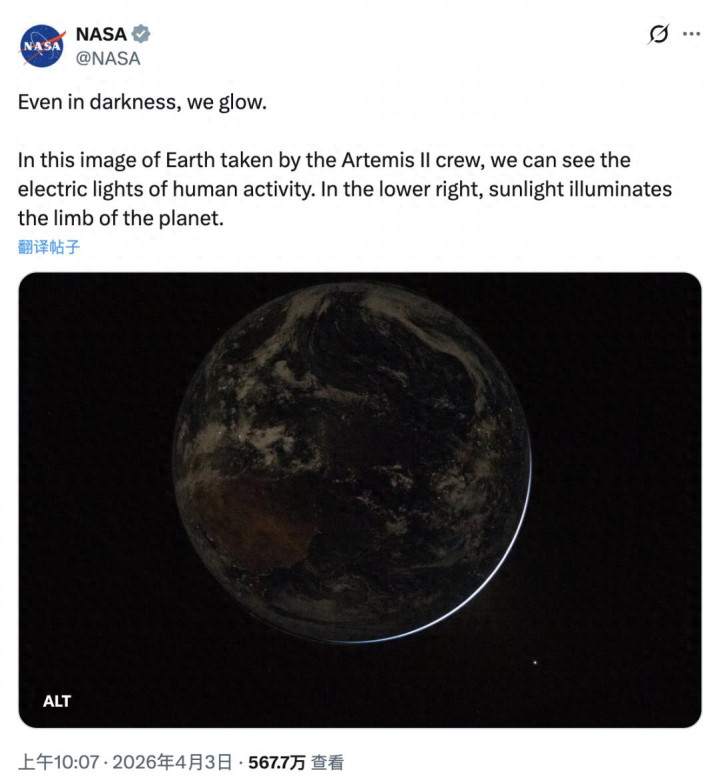
第一张,是阿耳忒弥斯二号任务机组人员拍摄的地球夜景:
配文写道:
Even in darkness we Glow.
In this image of Earth taken by the Artemis II crew, we can see the electric lights of human activity. In the lower right, sunlight illuminates the limb of the planet.
可以翻译成:
在黑暗中,我们仍在发光。
在这张由阿耳忒弥斯二号机组人员拍摄的地球照片中,我们能看见人类活动所点亮的灯火。右下方,阳光正照亮地球的边缘。
我们这个物种仅仅用了150多年的工业化和电气化,就让一颗原本沉默的行星在宇宙黑暗中“亮”了起来。
所以 NASA 这句“Even in darkness, we glow”特别动人。我们很渺小,但我们并不黯淡。
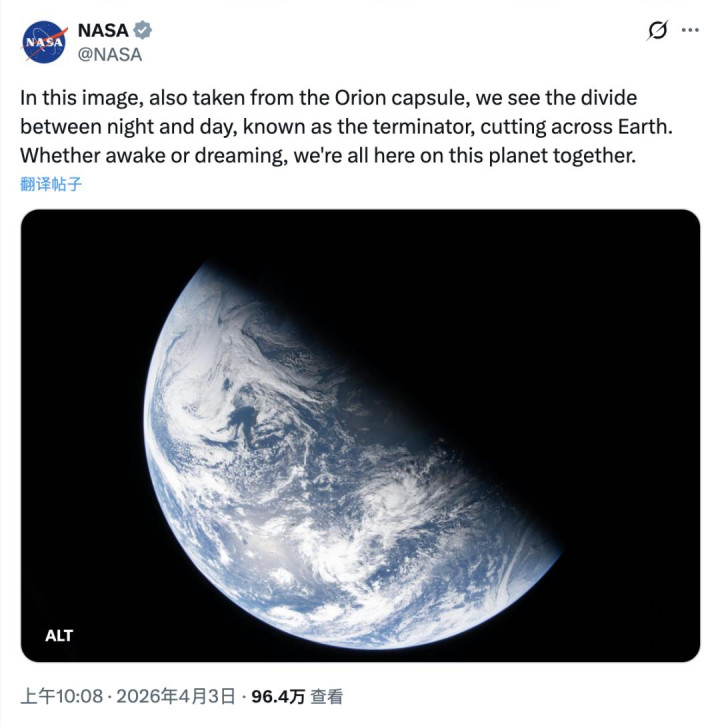
更令人挪不开眼睛的,是 NASA 发的另一张关于“晨昏线”的照片:
配文说:
In this image, also taken from the Orion capsule, we see the divide between night and day, known as the terminator, cutting across Earth. Whether awake or dreaming, we're all here on this planet together.
这里重点说一下,“晨昏线”为什么叫 terminator?
terminator 常见的意思是“终结者“,但在天文领域中表示“明暗分界线”,它来自拉丁语 terminus,本义就是“边界、界碑”;在天文学里,terminator 就是指把明亮部分和黑暗部分分开的那条线,也就是我们中文说的”晨昏线”。
配文中最后一句尤其温柔:
Whether awake or dreaming, we're all here on this planet together.
无论清醒还是沉睡,我们都一起生活在这颗星球上。
晨与昏、明与暗、醒与梦,看似分属两边,但说到底,我们都还在同一个家园上,一起转动,一起生活。
我还看到底下有一条评论,写得特别好:

No borders. No flags. No religions. No rich or poor.
Just a planet half in light, half in shadow.
We build walls down here that don't exist up there.
Maybe the most important thing space exploration does isn't discover new worlds.
It reminds us how small our divisions really are.
翻译一下:
没有国界,没有旗帜,没有宗教之分,也没有贫富之别。
只有一颗一半明亮、一半沉入阴影的星球。
我们在地面上筑起的许多高墙,从太空看其实根本不存在。
也许,太空探索最重要的意义,并不只是发现新的世界,
而是提醒我们:那些我们无比在意的分歧,原来并没有想象中那么大。
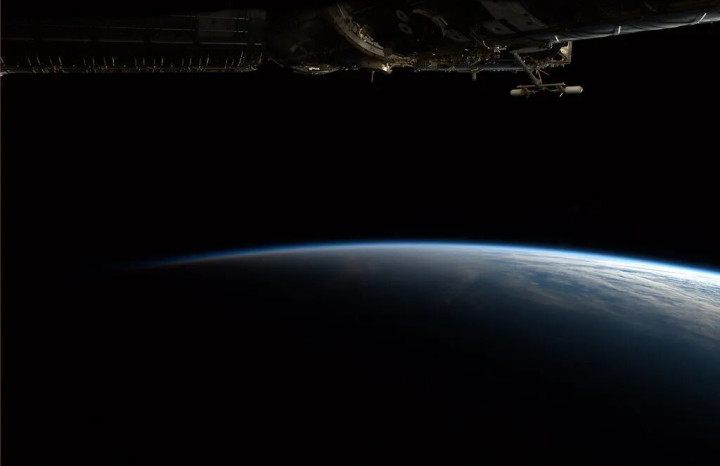
这其实也是很多宇航员都提到过的一种感受——总观效应(Overview Effect),当人从太空回望地球,视角会突然被改写。
你看到的,不再是地图上的国家,不再是新闻里的对立,不再是谁和谁站在不同立场。你看到的只是同一颗星球,只是共同生活在上面的几十亿人。大家一起醒来,一起入睡,一起在明亮里忙碌,也一起在黑暗里安静。